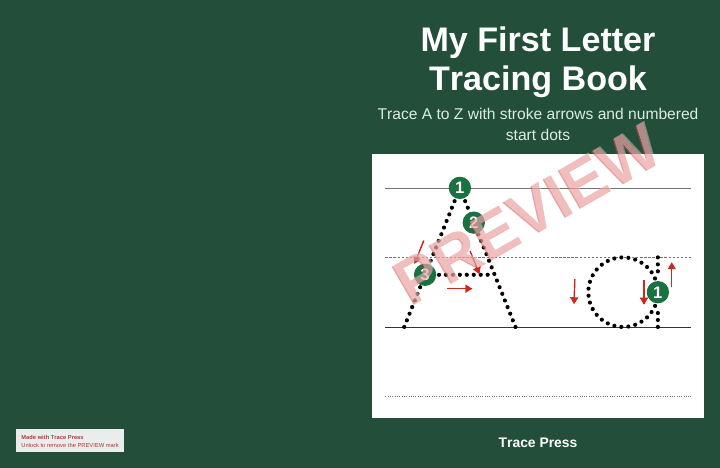
The height from the top line to the baseline on the tracing rows. Bigger lines are for younger hands.
Both cases on each page, or a book of capitals or of lowercase alone. 26 pages either way.
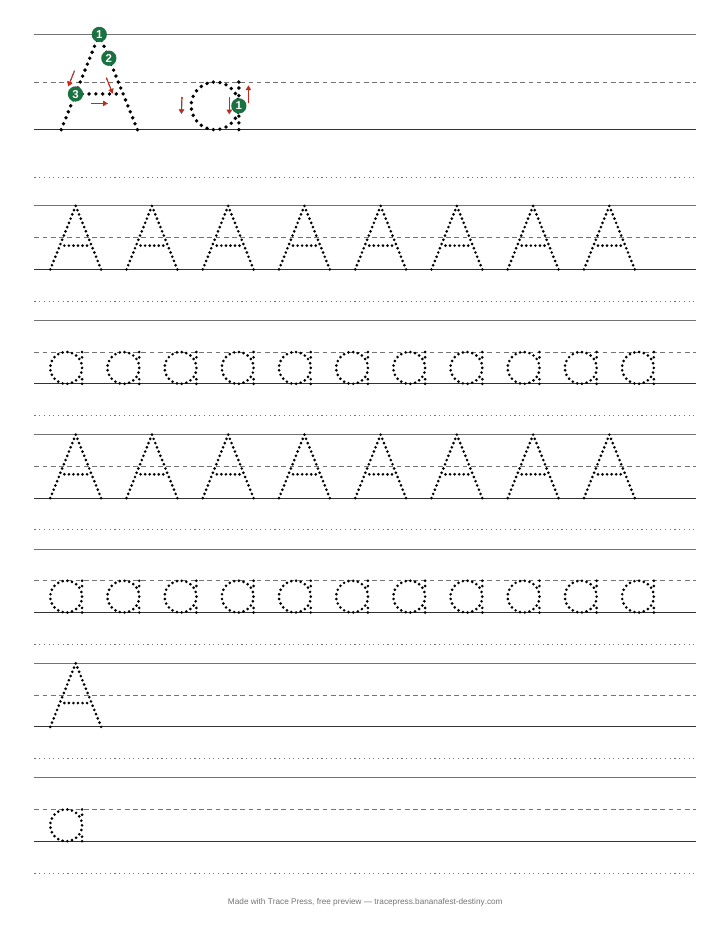
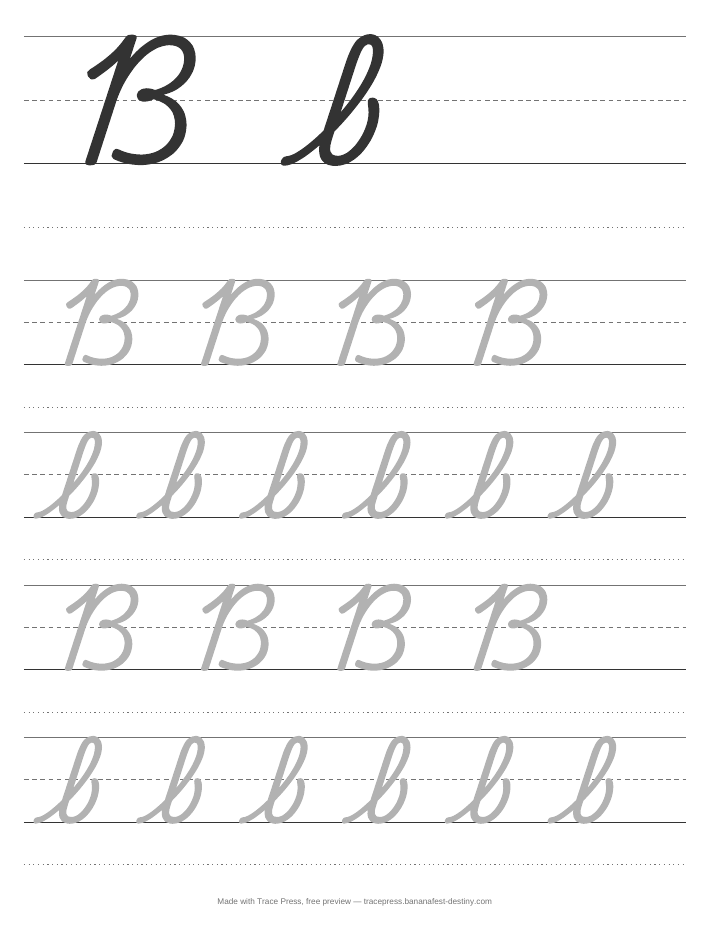
Print, with numbered start dots and arrows, or joined cursive: a solid model row, then grey rows to write over. Lines pages stay print. The cover follows it.
Only turn this on if you chose bleed in KDP. The page is then 0.125" wider and 0.25" taller, as KDP asks.
“A is for apple”: an outline of a word that starts with the letter (apple, ball, cat…), with the word under it, for the child to colour. Print letters only; Q is a quilt. Number pages 1–9 get that many stars to count, with the number word. The cover gets the apple too.
A first page with the words and a big writing line for the child's name. It's one of the 52 extra pages, so one fewer word fits.
A last page that says “Well done!”, with a big writing line for the child's name and “finished this book.” under it. It's also one of the 52 extra pages.
Four pages before A: down and across lines, slants, zigzags and waves, circles and crosses, with start dots and arrows.
Six pages before A, after the lines if they're on: square, triangle, rectangle, diamond, star and heart, one a page, with start dots and arrows.
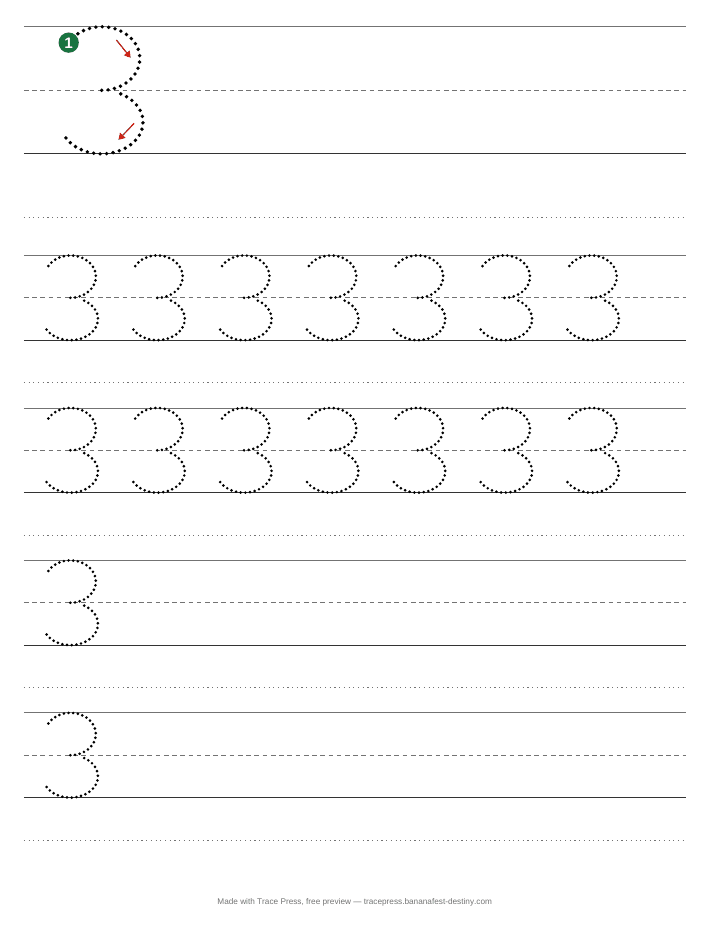
Ten more pages after Z, one for each digit, with start dots and arrows like the letters.
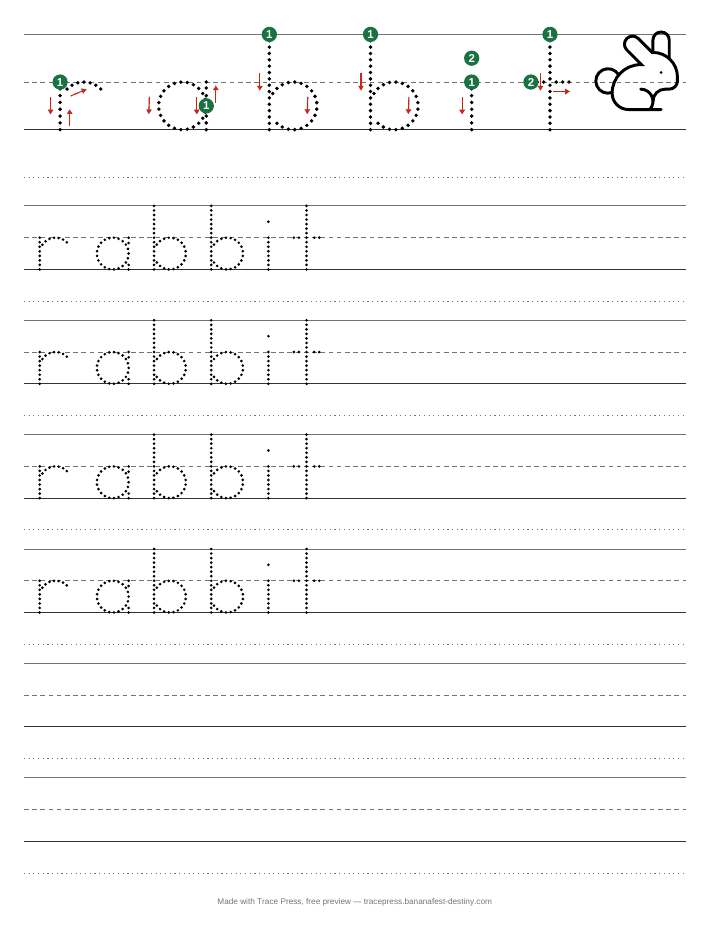
Sight words, names, a theme. Separate them with commas or new lines. Each gets a page after Z: the word large with start dots and arrows, a picture to colour if Trace Press has one for it (print only), then rows to trace. Letters and numbers only, up to 52 words. The other extra pages count against the 52: Numbers 0–9 take 10, lines 4, shapes 6, and the name page and the well-done page 1 each.